What is Strategy Without Recipes?
I'm Ryan Sproull, and as anyone who's met me in the last 10 years knows, I'm writing a book.
It's my big book on strategy, a distillation of my unusually varied experience with professional strategy – business strategy, creative strategy, CX strategy, marketing strategy, brand strategy, digital strategy, all the strategies.
I'm interested in all of them and their differences, but I write about what they have in common. The underlying structure of strategy. When you understand that, you're better at strategy in each individual domain. But I didn't realise this for a long time.
When I was at university, I enjoyed cooking four or five recipes I'd discovered and memorised. When I had all the ingredients, I was all good, but if one thing was out of place, I was lost. If I didn't have oregano, could I skip it? Swap in basil? I had no idea.
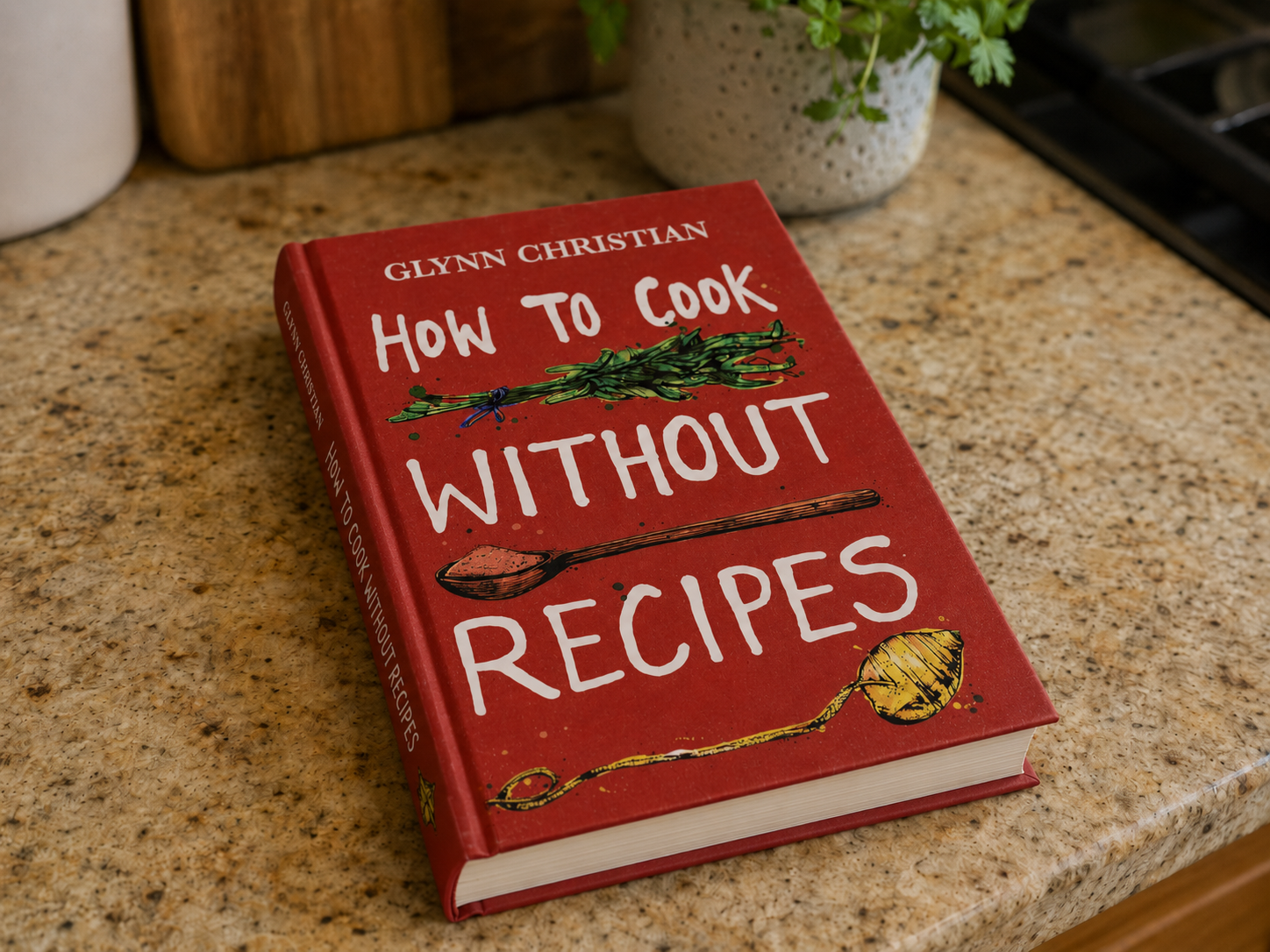
Then I found this book in a second-hand bookstore. The author, Glynn Christian, described how cooking worked, how tastes and flavours worked, and provided a principle of "flavour trails" to describe how recipes and meals can be planned. And sure, the book included a few recipes to illustrate the points.
He wasn't teaching the reader how to follow recipes better; he was teaching the reader the underlying logic of how recipes work, how to create their own. And that did just happen to help the reader follow recipes more effectively too.
For much of my professional strategy career, I was a collector of recipes. I found and re-used frameworks and models that looked and sounded clever – and made me look and sound clever. Early on, that made me feel like I knew what I was doing. But over time, I realised I had no idea.
Just like with the cooking recipes, if the situation wasn't just right for a framework I knew, I didn't have the understanding to adapt, let alone develop new ones. When things didn't work, I didn't know why. Hell, when things DID work, I didn't know why.
The imposter syndrome ate away at me, contributing to a life-threatening drinking problem. I ended up dealing with both at the same time. I got sober and made a project of getting genuinely good at my job. My background in philosophy kicked in and I began looking for underlying patterns, a grand unifying theory.
Well, I found one. It made me better at my work. Turning it into a training course forced me to clarify it. Writing it into a book is forcing me to clarify it further. This blog is an exploration of what I've developed, along with pressure-testing and ironing out some of the wrinkles.